Book Compass
Book recommendations based on reading history
View prototype (desktop only)
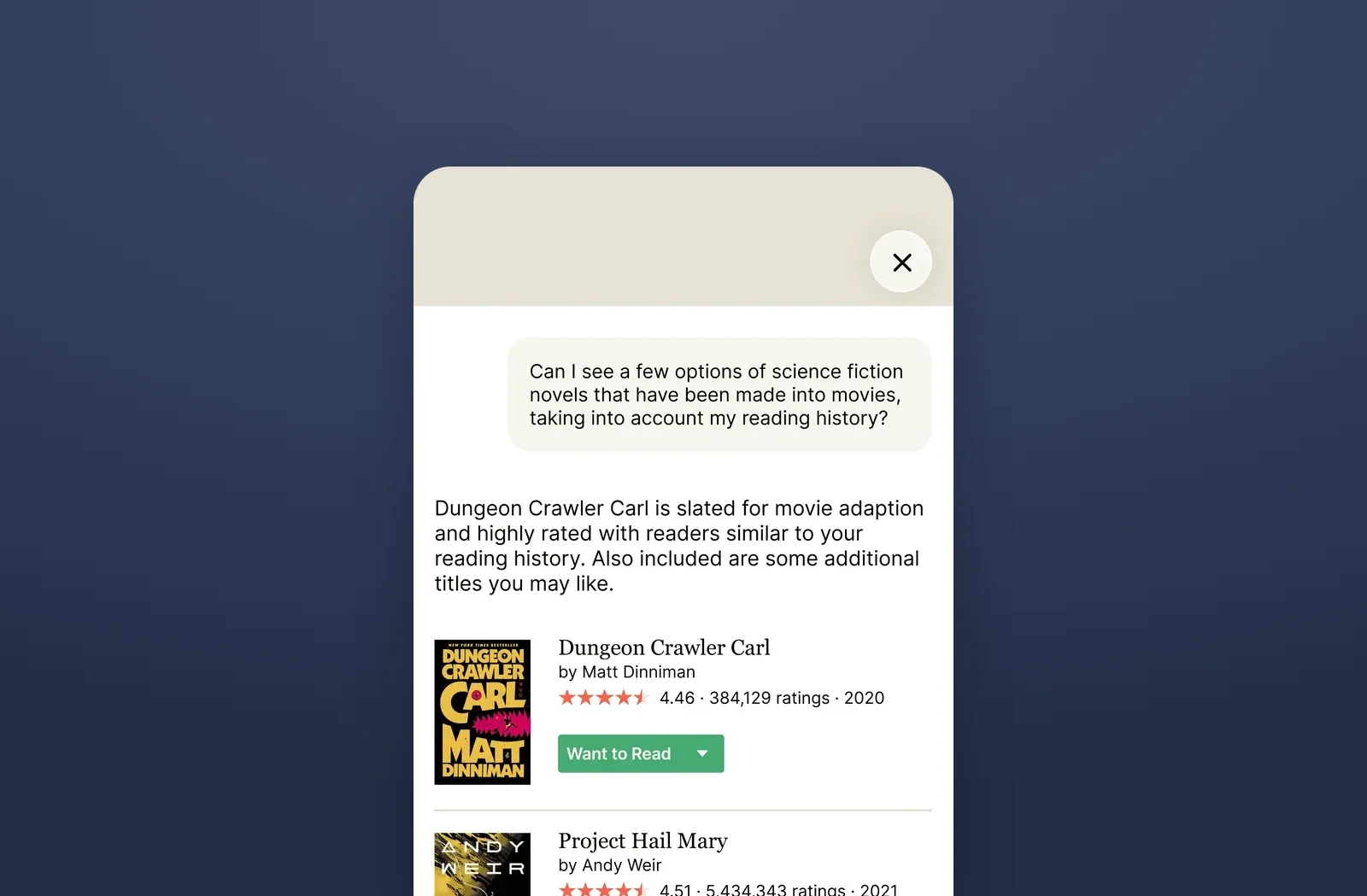
The story
I am currently building this as an iOS app. As an avid reader who can no longer rely on bookstores or book recommendations, I was always feeding my Goodreads data into Claude and otherwise querying Claude to find new things to read that would follow my train of thought or interest. I wondered if others had this issue, so I decided to explore the idea.
User behavior
When I interviewed eight readers, five said they struggle to find books they like. Most turn to Goodreads, YouTube and TikTok for ideas, and to ChatGPT or Gemini when they want something more specific. Goodreads was the most cited social media platform for online book-related activity, and survey respondents largely mirrored Goodreads user demographics and behavior.
Research methods
The research was iterative and eventually led to a user profile that could be used for testing.
Since the general US population is the target, I chose to survey reading channels on Reddit to get a broad sample on reader demographics and behavior—I would use a service to find participants in the future. A survey would allow me to be quick with broad reach, and uniformly gather answers to targeted questions, without the need to read social cues. I compared the survey results for ~150 Americans to user data reported by Goodreads (the most widely reported reading app) and the shape of the user was largely the same. Initially I wanted to see if Reddit would be a good source for user behavior interviews, but quickly found the participants were not matching the needed profile, so I decided to use UserInterviews.com (by UserTesting). I also found that the UserInterviews platform streamlined the administrative side of the interview process and made it easy to source participants that closely match requirements. Now AI interviewing platforms simplify this even further, though they may require some handholding for accuracy.
Based on initial behavioral data from surveys and exploratory interviews, I was able to land on a concept and the user’s basic needs, build a prototype, then test it through UserInterviews with a user pool, adjust to their needs, and explore other directions.
First prototype
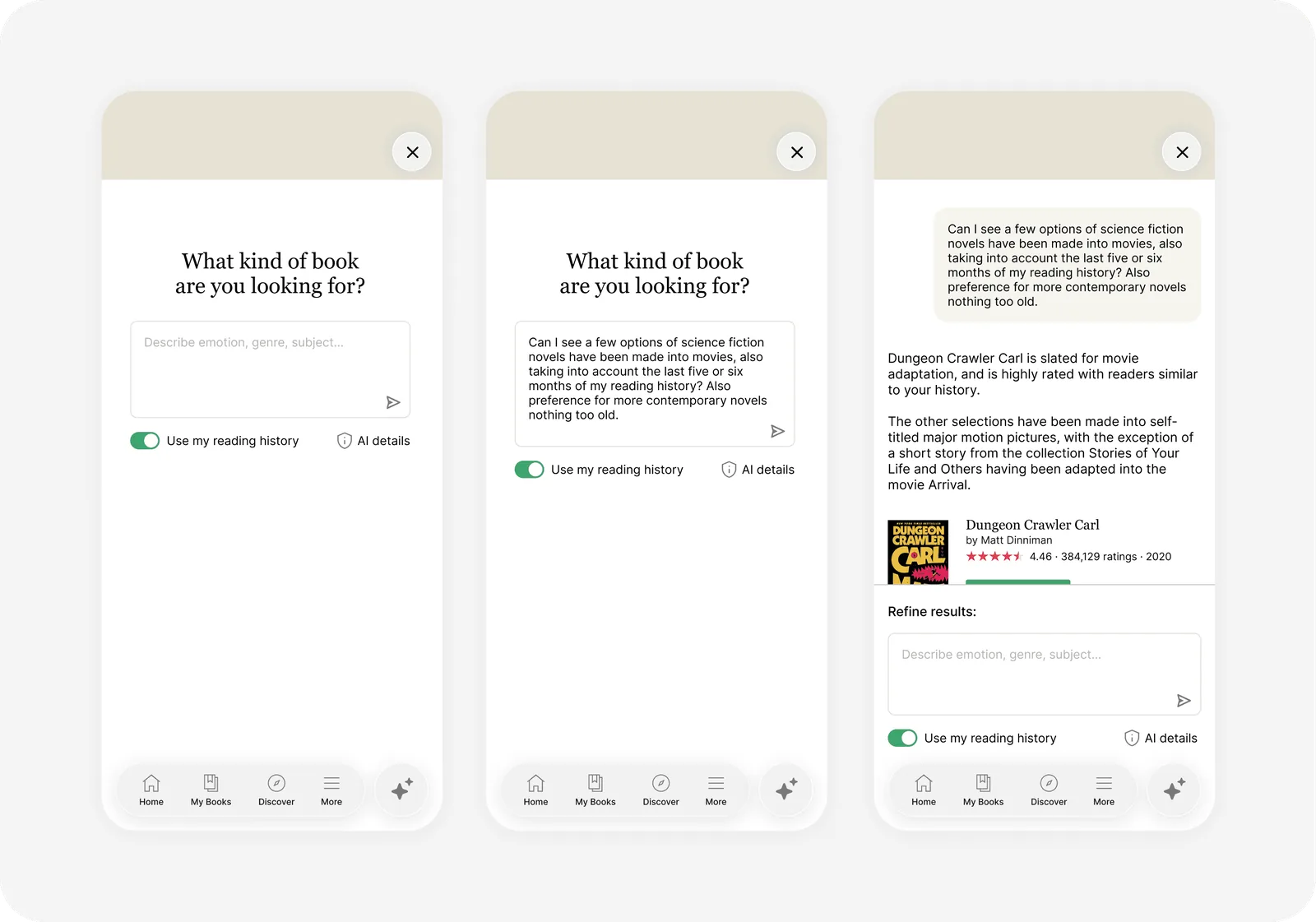
Exploratory research revealed the required functionality, and the familiar chatbot archetype conforming to Goodreads conventions simplified interaction and made redundant any taxonomy-based interfaces.
Automatic variations
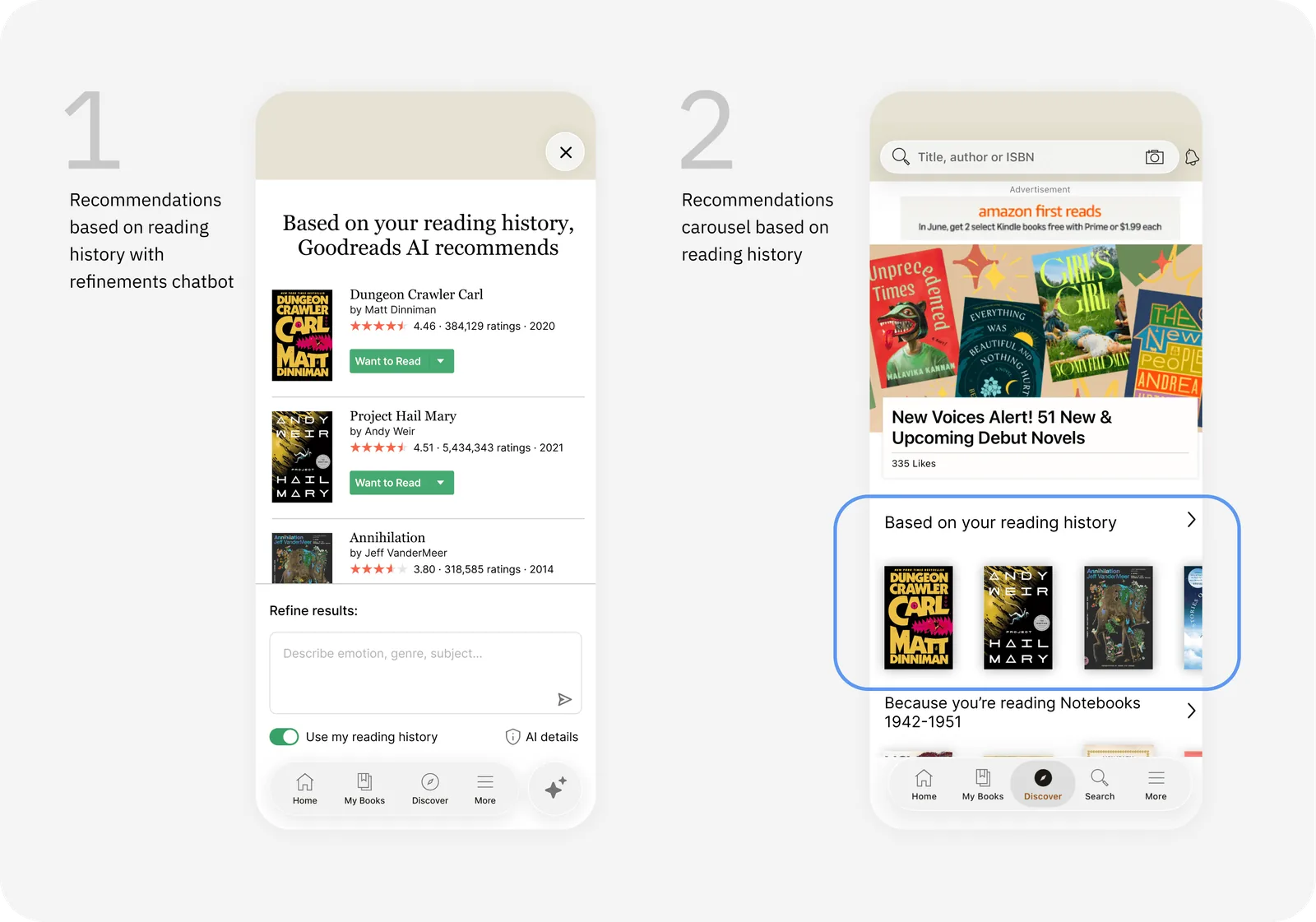
One of the usability testing participants found thinking and typing to get recommendations too complicated. This pointed to developing several options that would pre-populate recommendations based on reading history, with and without the option to refine.
Building the app
Since the majority of users liked the simple chatbot, I am building the main app with its necessary connections, while considering adding an automatically populated carousel below it if it’s not too distracting. I may A/B test some versions to decide what exactly to release, but first want to finish the groundwork for the coded mobile app and supporting website.